
Gatsby was born dysmature. What does that mean?

Updated: Jun 19
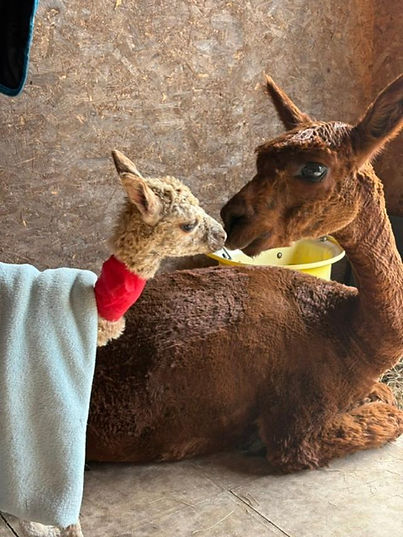
The birth of a cria is a moment filled with excitement and hope for alpaca breeders. Yet, sometimes this event brings unexpected challenges, especially when a cria is born dysmature. This happened to us on Sunday when Gatsby arrived at 10 am. His birth was very straightforward but we soon realised that he was not as strong as he should be. Dysmaturity in newborn alpacas means the cria is born underdeveloped, often with low birth weight and immature organ systems. Gatsby was 6kg which is at the low end of the normal 6-9kg range. This condition can create serious health risks and requires immediate attention and care. Understanding the signs, and management of dysmature cria births is essential for anyone involved in alpaca breeding.
What Does Dysmature Mean in Alpacas?
Dysmaturity refers to a cria born after the normal gestation period but showing signs of incomplete development. Unlike premature births, which happen before the expected delivery date, dysmature crias are often full-term or even overdue but still appear weak and underdeveloped. This condition can affect their ability to regulate body temperature, suckle effectively, and fight infections. This is why Gatsby was in a coat for several days despite the air temperature being quite warm.
Key characteristics of dysmature crias include:
Low birth weight compared to average crias born at the same gestational age
Thin, loose skin with little fat coverage
Weak or absent suckling reflex - thank fully for us, Gatsby had a great suck reflex and a very patient mum in Maria.
Poor muscle tone and lethargy
Delayed standing or inability to stand soon after birth - it took Gatsby well over an hour to stand.
Recognizing these signs early can make a difference in the cria’s survival and long-term health.
Immediate Care for a Dysmature Cria
When a dysmature cria is born, quick and focused care is essential to improve its chances of survival.
Warmth and Shelter
Dysmature crias struggle to maintain body temperature. Providing a warm, dry environment with shelter from wind and rain is critical. In his shelter Gatsby had a heat lamp, duvet and dog bed to snuggle in over night.
Assistance with Feeding
Many dysmature crias cannot suckle effectively on their own. Hand-feeding colostrum within the first few hours is vital to provide antibodies and energy. Thankfully, Maria was very, very tolerant of us milking her and feeding her milk to Gatsby every 2 hours in a bottle until he was strong enough to do it for himself.
Monitoring and Veterinary Support
Close observation for signs of dehydration, weakness, or respiratory distress is important. Our vet assessed Gatsby's condition and suggested that we provide fluids, antibiotics and a plasma transfusion to be absolutely sure he had the essential antibodies he needed. We had prepared for this and had some plasma in the freezer taken from blood donated by Marius a few months ago.
Gatsby is now 6 days old and is doing very well. He is nursing from Maria and putting on about 200g a day in weight. He runs around more and is becoming quite bold. All the things we want to see in a healthy cria!

Comments